
|
|
|
Review: Garana Jazz FestivalBob Weir enjoys music from Youn Sun Nah, Stanley Clarke, Adam Baldych and many more at a special jazz festival in rural Romania
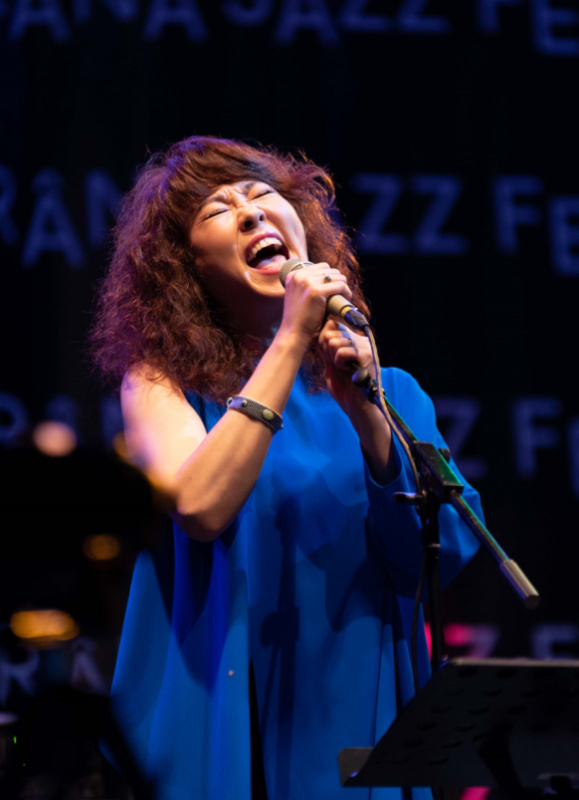
Four or five bands appeared each night from 7pm (6pm on Sunday) to the early hours of the following mornings. The groups were mostly European (often multi-national combinations) with a sprinkling from the USA, South Korea, Israel, Cuba, India and Jamaica. Poland and Scandanavia were strongly represented. More importantly, the bands were chosen for their top-class jazz credentials and current form, ensuring that the festival punched well above its weight. There were also daytime concerts in the original inn courtyard and at an attractive church by bands and soloists from Romania and Moldova. The open-air events were blessed with perfect weather. The stylistic range was wide and most appealing. There were two female vocalists. Youn Sun Nah (pictured right) with Swedish guitarist Ulf Wakenius played pretty much the same programme I heard five years ago in Skopje but it retained its charm. The South Korean sang some of her own compositions, items by Leonard Cohen and Tom Waits and a particularly enchanting folk love song. Romanian Elena Mindru, gifted with an expressive, classically trained voice, had sympathetic support from her Finnish trio and Polish prodigy violinist Adam Baldych. The piano trios of Kekko Fornarelli, Stefano Battaglia (both Italian) and Roberto Fonseca (Cuba) offered diverse, creatively compelling approaches to that most basic of jazz ensembles. Rymden with Dan Bergland (b) and Magnus Ostrom (d) from the late and much lamented EST combined with pianist Bugge Wesseltoft for a more energetic, co-operative and contemporary style. With new material from all three members, this was Scandi-jazz at its best. Contrasting types of free jazz were provided by the mixed nationalities of La Classe Operaia Va In Paradiso (two reeds and rhythm) and the German Sebastian Studvitzky Quartet. Both played complex originals and produced a variety of stimulating sounds. The free and spirited Ornettology by Paradiso was the standout.
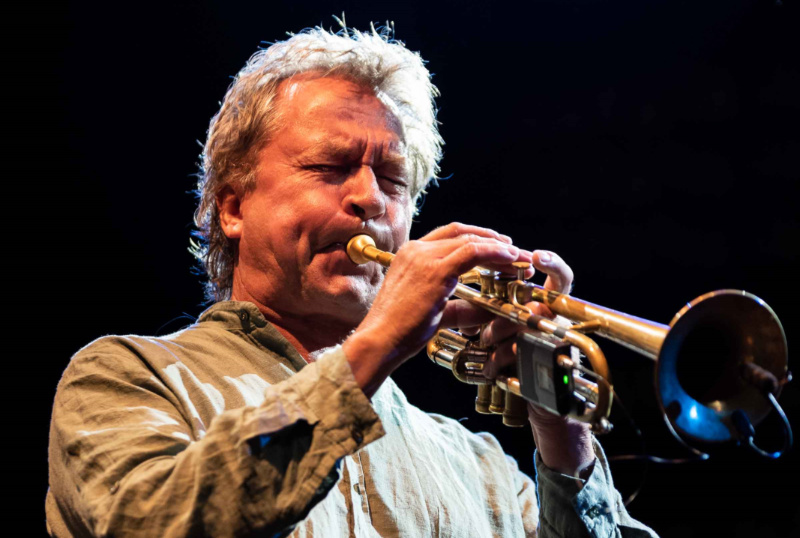
The famous Jamaicans Sly Dunbar and Robbie Shakespeare with trumpeter Nils Petter Molvaer (pictured left), Eivind Aarset (elg) and Vladislav Delay (pc, elec) were unclassifiable. Nils has shown in the past that he is not shy of unusual collaborations but this was arguably a step too far. The reggae rhythm team seemed too basic and repetitive for the subtle Scandanavians. The Hendrix-influenced guitar of Aarset provided some common ground but overall it was an interesting experiment that failed to deliver consistently. The festival's four jazz fusion attractions were in some ways the most impressive for entertainment and musical quality. Poland's Pink Freud, together for 20 years, played superbly on everything from supercharged jazz-rock to stylish free jazz. Avishai Cohen's Israeli band Big Vicious (t, elg, elb, 2d and tasteful electronics) were masters of exciting and creative music in late Miles mode. Electric bass was dominant at the festival's two final concerts. Ekalavya was a young band from India playing skilful fusion with Bollywood overtones. Their bassist, 22-year-old Mohini Dey, was a revelation for her speed and control. She certainly impressed bass maestro Stanley Clarke, whose band followed for a thrilling conclusion to the festival - but not before the two bassists jammed together until 3am, leaving the rapturous crowd with a reminder of why the Garana Jazz Festival is so special. Keep an eye on the Garana Festival website for next year's details. Photos by Rita Pulavska |

 If ever there was an unlikely location for a prominent jazz festival it must be this one in remote rural Romania. It was started 22 years ago by two local enthusiasts in the backyard of Garana's only inn and has grown in esteem and ambition to today's purpose-built arena with an enviable programme of top-class jazz attractions.
 Bandes Originales (Vincent Courtois, Daniel Erdmann and Robin Fincker) with the unusual instrumentation of cello and two reeds and a return by violinist Adam Baldych with his Norwegian band both excelled, playing contemporary European jazz with classical music roots. Puba Jazz Connection, comprising veterans from Romania, Germany and Poland, was the only mainstream outfit on the bill. The quintet delivered convincing hard-bop in Jazz Messengers style.